Lucas Radebe of Leeds United: Humility, Community, Liberation
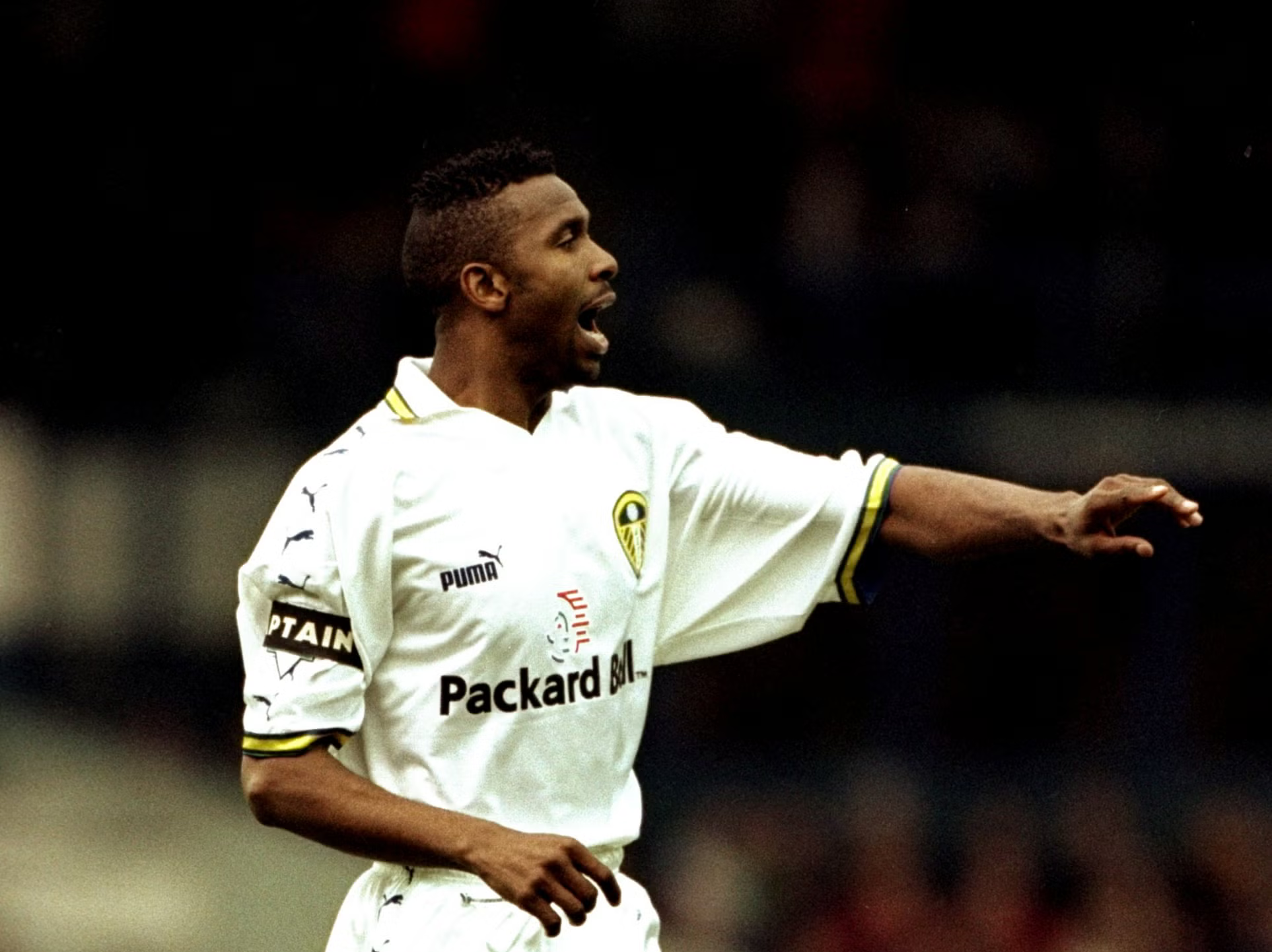
This blog reflects on the career and life of the South African Leeds United player, Lucas Radebe, who embodied the values of humility and commitment to community, and symbolised the struggle for liberation from apartheid.
Lucas Radebe was born in 1969, in Diepkloof, Soweto, as one of 11 children. Growing up during the violent final years of apartheid, he was frequently exposed to civil unrest. To escape the danger, his parents sent him to the Bophuthatswana “homeland” at age 15.
There, he began his career in the Bophuthatswana Soccer League with ICL Birds, starting as a goalkeeper before moving into the midfield. His professional breakthrough occurred in 1989 when he signed with Kaizer Chiefs. He quickly became a standout for his “acrobatic” defensive style and ability to silence the most lethal strikers.
In 1991, while shopping for his mother in Soweto, Radebe was shot in the back. The bullet exited his thigh but miraculously caused no vital damage. He suspects the shooting was a targeted hit to prevent him from changing clubs. This incident influenced his decision to move to England in 1994, when he signed for Leeds United for ₤250,000.
Known affectionately as “The Chief”, Radebe's move to Leeds was initially as a secondary addition to help teammate Philemon Masinga settle. However, he soon became the club’s most valuable asset. After transitioning from midfield to centre-half, his physical attributes and “calming influence” led to his appointment as captain in 1998.
Though Mandela’s bond with the city of Leeds dates to the 1960s, when local students led calls for his release while he was imprisoned by the apartheid regime, Radebe introduced him to the city when he travelled to Leeds in 2001 to accept one of the city’s highest honours: Honorary Freedom of the City. Watch Mandela speaking in Leeds, introduced by Lucas Radebe.
Radebe was also a cornerstone of “Bafana Bafana” (South Africa National Team) following the country's post-apartheid return to international football. He retired as South Africa’s most-capped player with 70 appearances.
Off the Field, Radebe is widely respected for his humanitarian work and leadership beyond football. In 2000, he received the 2000 FIFA Fair Play Award for his efforts to combat racism in the sport. Overall, his success in the Premier League made African players significantly more marketable to international scouts, and he is celebrated for using football to help unite races in South Africa.