Playing for the Future: Football and the SDGs
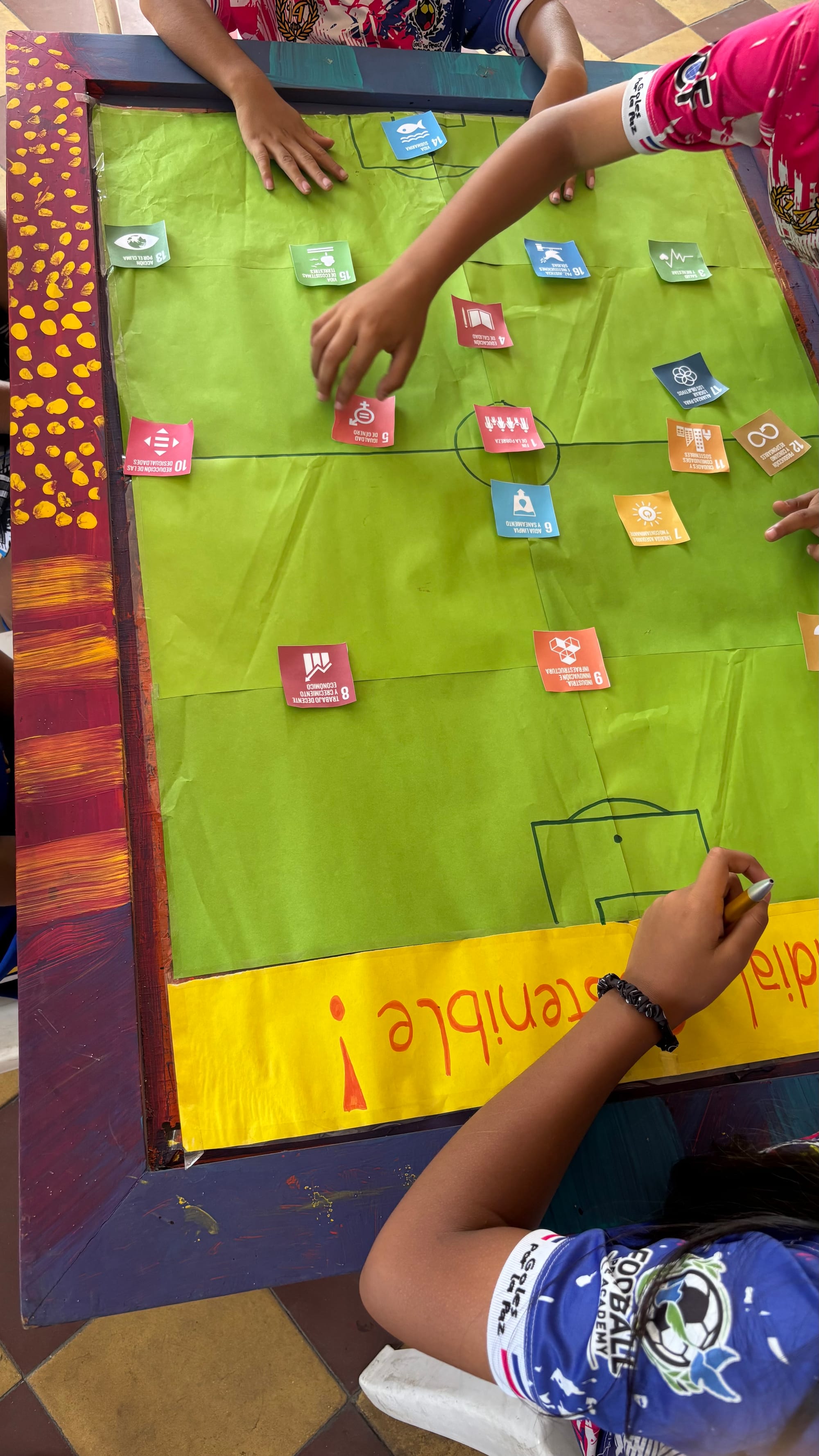
“What if the SDGs were a team in the World Cup?” This question was on a LinkedIn post by a sustainability expert and inspired me to create a peace education activity for children. At the pilot project of the Football Peace Academy in northern Bucaramanga, Colombia, we leverage the appeal of the sport on and off the field to develop and strengthen peacebuilding capabilities of local youth.
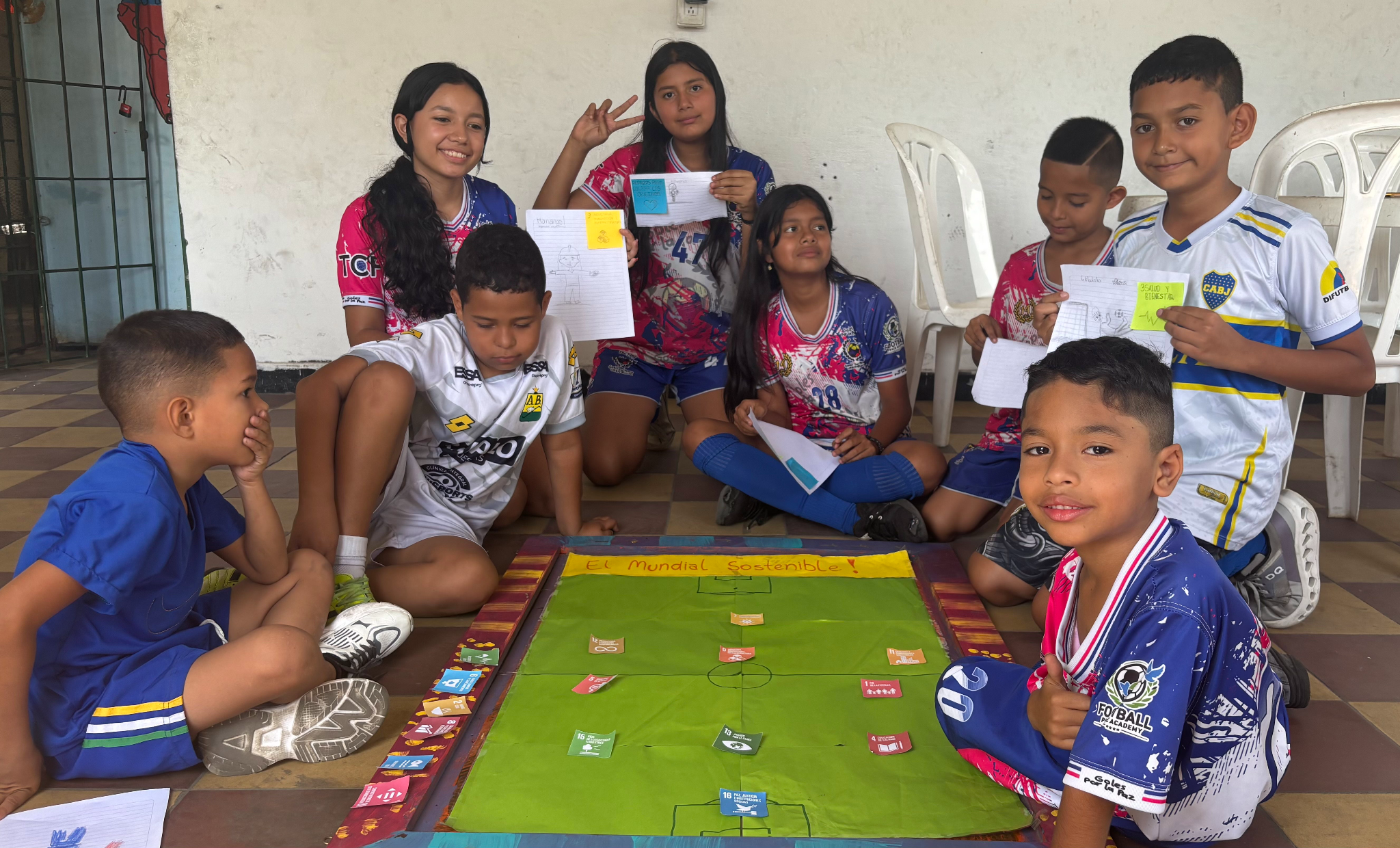
This year so far, we are combining the socioemotional competencies embedded in the international frameworks for peace and development introduced in the first year of the project – namely the IEP’s Eight Pillars of Positive Peace and the UN’s Sustainable Development Goals – with what we call ‘life project’, a psychoeducational creative tool that guides children and adolescents in self-awareness, goal-setting and skill development for a positive outlook and decision making.
For this specific activity, I implemented a more simplistic approach appropriate to the age group I was working with (6-10 year olds). We started with a quick review of the SDGs, what they were, what each of them entailed and why they were all equally important. Then, we took it to playing field.
Participants were given cards of the 17 Sustainable Development Goals and had to place them on the field based on how well they progressed in the past year. I retrieved the information from The Sustainable Development Goals Report 2025 and simplified it into a 3-point scale, indicated by the colors red, yellow and green. The focus of this approach was on discipline and achievement: the SDGs that progressed better made up the starting team.
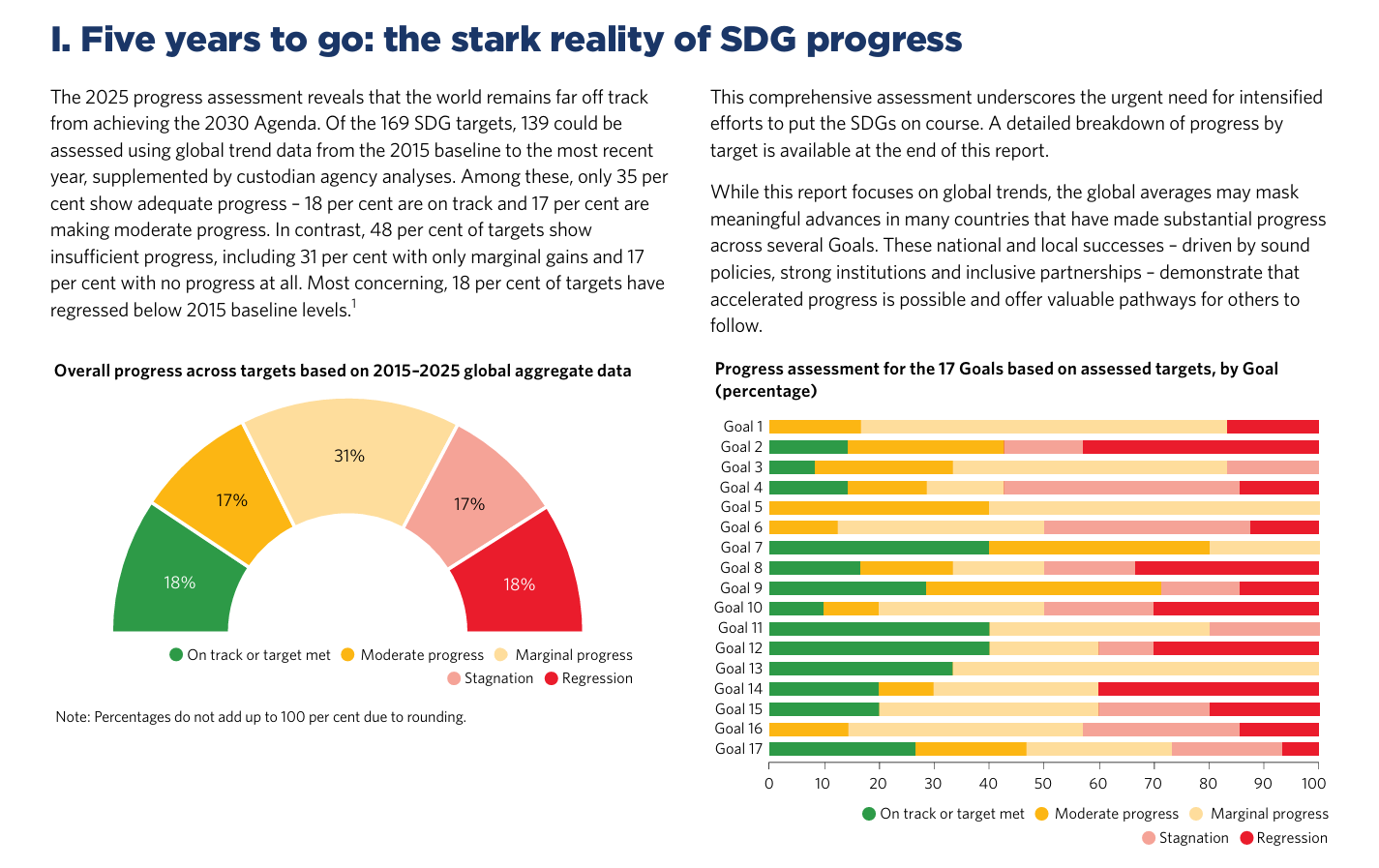
Excerpt extracted from page 4 of The Sustainable Development Goals Report 2025 (English version)
This allowed them to warm up for the next part of the activity, the second approach: Participants were told to distribute the players (the SDG icons) on the pitch according to the function they served: attack, midfield or defense. We had a quick discussion of what each role did in the game: Forwards are the ones who drive the play forward, create new opportunities, and open up the field; midfielders connect the defense with the attack, distributing play evenly and maintaining the match's tempo; and defenders are the foundation of it all, responsible for protecting the goal. And from there, I peaked their minds with questions, such as should SDG 6 (water) play offense or defense? Is SDG 16 (peace and Justice) a forward or could it be the team’s goalkeeper?
Their ability to grasp the concept and articulate it through critical thinking was impressive; a 6 year-old said that “actually, Life Below Water (SDG 14) must be the goalkeeper, because we must take care of our oceans, the largest part of our planet,” and I was in no place to disagree. As a matter of fact, I had left indications on the back of each card in case they needed a little push, but they didn’t use them and in the end the team formation was very much in line to what I had proposed.
Finally, we ended with a different activity that linked our overarching goal for year 2 (Life Projects) with the SDGs. Over the past few months, youth have learned socioemotional skills and tools to set and achieve their personal and professional goals. So the lesson was about being intentional in their professional lives in order to contribute to betterment of society.
I asked them to draw or write what they want to be when they grow up: police officer, veterinarian, football referee, photographer, engineer, football player, lawyer… After that, I asked which SDG their future jobs contributed to: justice, health, partnerships, industry… With that clear (and sometimes, more than one SDG as a side cause to their dream professions), they were encouraged to think about the actions they need to take as they serve in that role to really help advance the global goals; in other words, being intentional:
- “I will show the red card when it’s needed and fair.”
- “I will drive the police car very carefully.”
- “I will photograph and connect with people.”
- “I will raise awareness and take care of the animals.”
- “I will be a disciplined football player and a positive role model.”
By playing with the SDGs, children are learning about global frameworks and rehearsing for their futures. On the pitch, the SDGs become tangible teammates, turning abstract concepts into strategy, collaboration, and purpose. And as they include these commitments into their own life projects, they are equipped with critical thinking and a sense of intentionality, gaining an invaluable positive outlook way beyond the pitch, playing for a peaceful and sustainable future.