Football as a Tool for Peacebuilding: Examining Peres Center’s Initiatives Through the IEP Framework
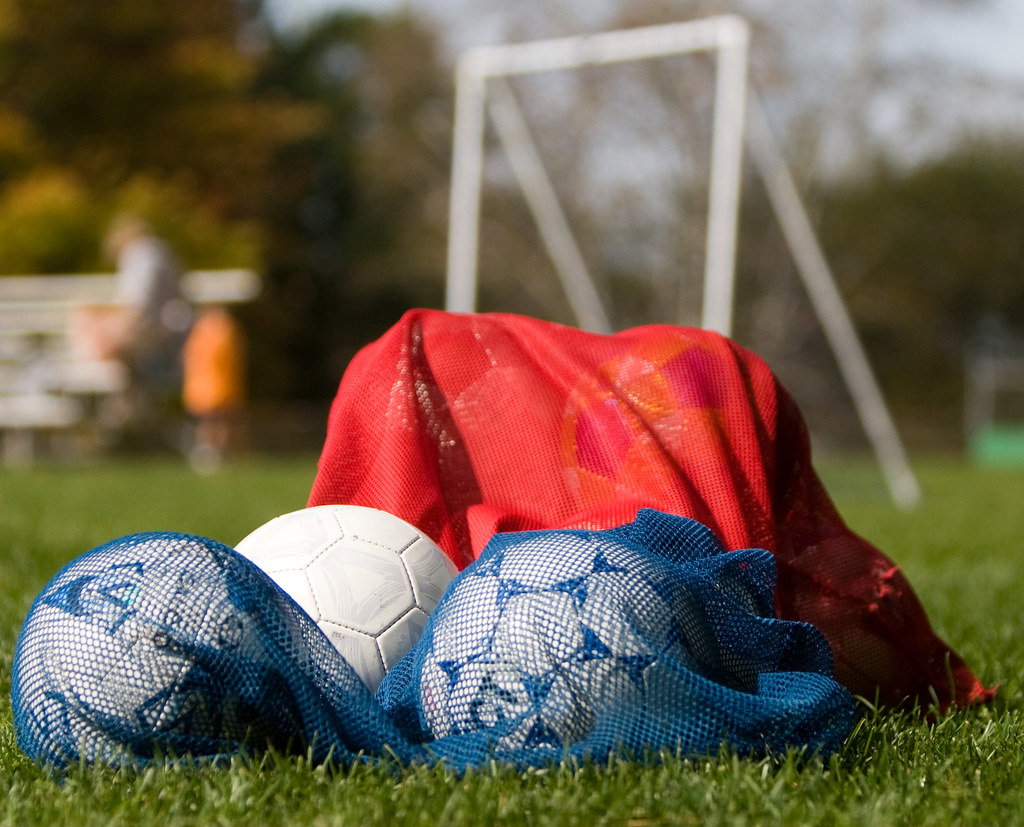
Can football serve as a tool for peacebuilding? While sport is not the primary agent for formal conflict resolution, it has functioned as a bridge-building mechanism and a constructive alternative to cycles of violence and destructive conflict.
Sport has the potential to unite and inspire cooperation – a fact recognized by the International Olympic Committee in its contribution to Sustainable Development Goals and championed by FIFA’s “Football Unites the World” campaign. As observed by David Goldblatt (2019):
“(F)ootball is... among the world's popular cultural forms... able to command the allegiance, interest, and engagement of more people in more places than any other sport... Everywhere football creates and dramatizes our social identities, amities and antipathies.”
To understand how a ball and a pitch can catalyse peacebuilding, we must view it through the lens of conflict transformation. John Paul Lederach’s integrated framework suggests that the journey from immediate conflict to a shared future requires a systemic shift across four interconnected dimensions: the personal, relational, structural, and cultural. In his approach, he prioritizes the “middle-range” leadership – community figures, such as educators and coaches, who have the agency to transform unbalanced, violent relationships into dynamic, peaceful ones.
We can narrow this theory toward peace education – a central component of peacebuilding that “provides an opportunity to embed the core values of conflict resolution around non-violence and emancipation and to define a transformative cosmopolitan model which seeks to apply these values in peacebuilding” (Ramsbotham et al, 2024, p. 274).
Through this educational lens, structured play is an effective socioemotional learning tool for children and youth across cultures. In this way, we connect local initiatives of Sport for Development and Peace to global frameworks (given that localisation is key for a cosmopolitan peace system), providing a pathway to transcend violence and liberate human potential.
We mentioned above the Sustainable Development Goals, and through their “Football for the Goals” initiative, the United Nations have recognized “football’s powerful and influential reach and to work together to become agents of change by aligning messaging, strategies and operations with the aspirations of the” (United Nations, n.d., Football for the Goals). Global Agenda. So, we want to take a more unconventional approach and highlight another global framework for positive peacebuilding.
The Institute for Economics and Peace (IEP) provides a non-political, culturally sensitive framework that serves as a baseline for these efforts: The Eight Pillars of Positive Peace. Within this, and according to IEP:
“(S)port can function as a powerful tool for peacebuilding, transcending cultural, economic, and political barriers to unite individuals and communities.” (Vision of Humanity/Institute for Economics & Peace, 2024).
The Peres Center for Peace and Innovation has pioneered this approach for decades and utilises sport to bridge the divides between Israeli and Palestinian youth. Their projects leverage the pursuit of excellence and teamwork through sport bringing youth from diverse religious and cultural backgrounds under a shared set of rules in a safe, healthy environment. Their impact radiates outward, influencing coaches, parents, and entire communities.
Their “Twinned Peace Sports Schools” project ensures that boys and girls, Arabs and Jews play in mixed groups as a single team, guided by coaches trained in specific peace education methodologies, and culminating in a World Cup-themed tournament where local mayors and professional players join the youth in a celebration of fair play. This initiative directly addresses two critical pillars of Positive Peace: Acceptance of the Rights of Others and Good Relations with Neighbours – fostering a culture of mutual respect on the field, the young athletes mirror the peaceful coexistence required of neighbouring states, proving that camaraderie can coexist with competition.
Moreover, their “Playing Fair, Leading Peace” project expands to yet another pillar: High Levels of Human Capital. In this initiative, university students around the country undergo leadership building and training in peace education through sports methodologies, ensuring that the benefits of sport (such as improved health, productivity, and education) are distributed through a sophisticated network of mentors.
As the IEP notes:
“Sport, with its emphasis on fair play, teamwork, and respect, encapsulates these conditions (that create and sustain peace can transform societies), serving as a microcosm of a peaceful society. As the world grapples with global challenges like climate change, social inequality, instability and conflict, Positive Peace and its systemic approach serves as a reminder of the importance of holistic approaches to problem-solving. Sport, with its capacity to inspire, motivate, and unite, is a vital component of this holistic approach, offering a blueprint for peace that extends far beyond the playing field.” (Vision of Humanity/Institute for Economics & Peace, 2024).
The synergy between grassroots efforts and professional football is perhaps best exemplified by the collaboration between the Barça Foundation and the Peres Center, in 2005, during the “Peace Match”. By bringing together star footballers in the Barcelona FC, and a Peace Team composed of Israeli internationals and Palestinian players, this match had the goal of contributing to the quest for Middle East peace and raise money for projects for local youth.
Ultimately, while football alone cannot resolve a conflict, it serves as a powerful energiser for transformation by bridging the personal and the cultural, helping those on opposite sides of a divide find common ground – or, more fittingly, a common goal.
References:
- Barça backing for 'Peace Match'. (2005). UEFA.com. https://www.uefa.com/uefachampionsleague/news/01af-0e6d2c0cd7ca-264ba805cfd4-1000--barca-backing-for-peace-match/ 
- Goldblatt, D. (2019). The Age of Football: The Global Game in the Twenty-first Century. W. W. Norton & Company.
- Institute for Economics & Peace. (2024). The Power of Play: Sports as a Catalyst for Peace and Societal Wellbeing. Vision of Humanity. https://www.visionofhumanity.org/the-power-of-play-sports-as-a-catalyst-for-peace-and-societal-wellbeing/ 
- Peres Center for Peace and Innovation. Sports Programs: Twinned Peace Sports Schools & Playing Fair, Leading Peace. https://www.peres-center.org/en/the-organization/projects/sports/ 
- Ramsbotham, O., Woodhouse, T., Miall, H., Toros, H., (2024). Contemporary Conflict Resolution (5th ed.). Polity Press. (Chapters 1, 4, 9, and 12).
- United Nations. (n.d.). Football for the Goals. https://www.un.org/en/footballforthegoals