The Club That Is Bringing Back Real Football
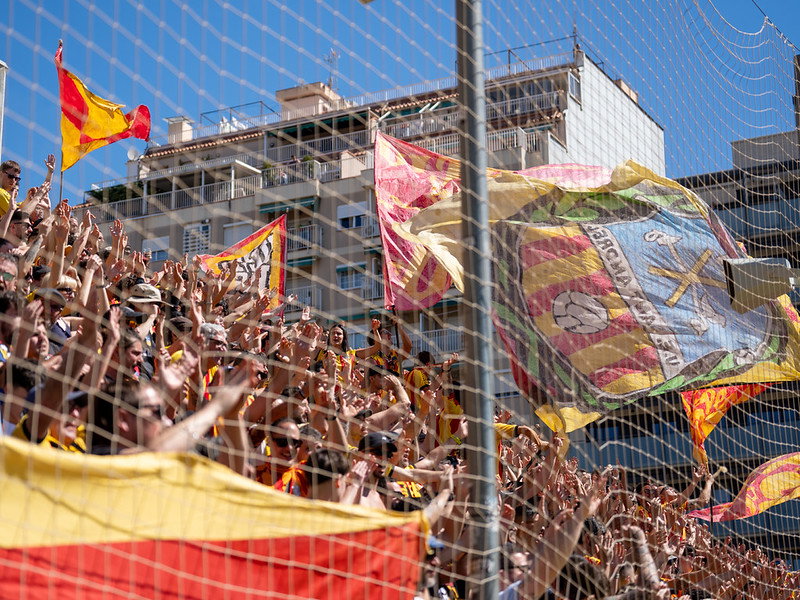
In the city of Barcelona, a different kind of football is taking root. UE Sant Andreu (UESA) is ‘the hottest ticket in town’, and the reasons go far beyond the pitch.
Having recently climbed to the third tier of Spanish football on a match on April 19 against Reus FC Reddis in its home stadium packed with fans, the club is experiencing a rise that feels like a cultural homecoming.
Since the world emerged from the isolation of the pandemic, people have been searching for connection, authenticity and a sense of belonging (as well-noted by Natxo Torné, a UESA supporter, in COPA90’s video). And they have found it at the Narcís Sala stadium. Membership has skyrocketed, growing from a modest 670 season ticket holders in 2020 to nearly 6,000 today.
This growth is because Sant Andreu represents its community and proves that football is still about feeling. In this blog, we highlight how it is also a powerful tool to build positive peace by strengthening key pillars in society.
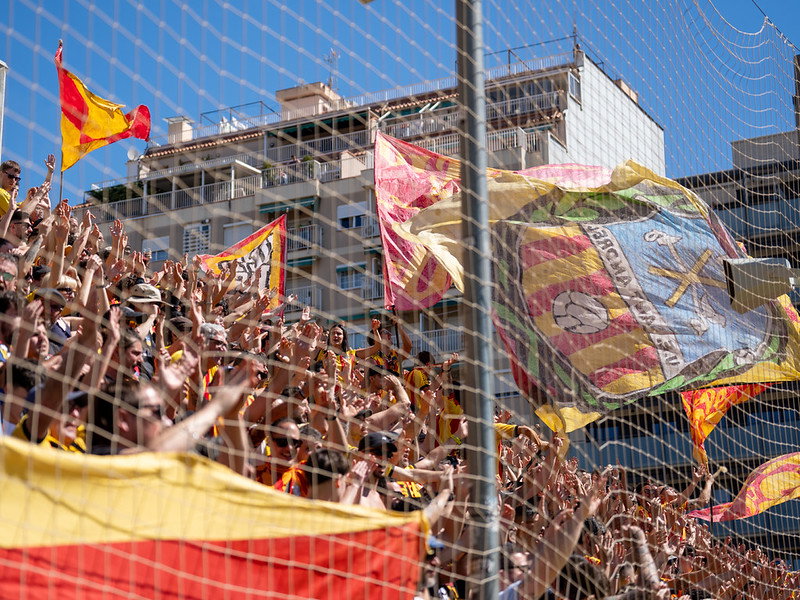
To understand the club is to understand its geography and history. Sant Andreu del Palomar was an independent town until its annexation by Barcelona in 1897. UE Sant Andreu was founded in 1909, making it one the oldest clubs in Catalunya. But football is played in Sant Andreu del Palomar ever since a sizeable colony of Scots moved to work in the area’s spinning industry. Both football and workers from all over the world looking for a better life have always been welcome and integrated among the pride residents of Sant Andreu. “That village spirit, with its distinct identity, has endured to this day,” says Roger Graells Font, the club’s director of communications.
Such a deep-rooted identity fosters a pillar of positive peace: Good Relations with Neighbours.
On matchdays, the Narcís Sala stadium is, according to Gerard Álvarez (spokesperson for the club), “a meeting point” for diverse groups. Nestled within the community, neighbours can watch the action from their balconies and local bars overflow with fans. The club also encourages both youth and the elderly to engage with football and the neighbourhood, fostering intergenerational connections.
Their status as a cultural pillar of Catalunya was cemented in an episode in 1977, when Salvador Dalí saved the club from economic collapse. At the request of the managers at the time, he painted a piece to be auctioned for the team’s benefit – an act as surreal as his art.
While modern football is often criticized for its money-driven nature, Sant Andreu stands as a defiant alternative – and expresses it through one of the chants: “Odi Etern al Futbol Modern” (Catalan for “Eternal Hatred to Modern Football”). But more than rhetoric, they take it to action. The club’s identity is built on a foundation of human values and another pillar of positive peace: Acceptance of the Rights of Others. As Gerard Álvarez puts it, they are an “anti-fascist, anti-racist, feminist, Catalanist, and human rights-defending club.”
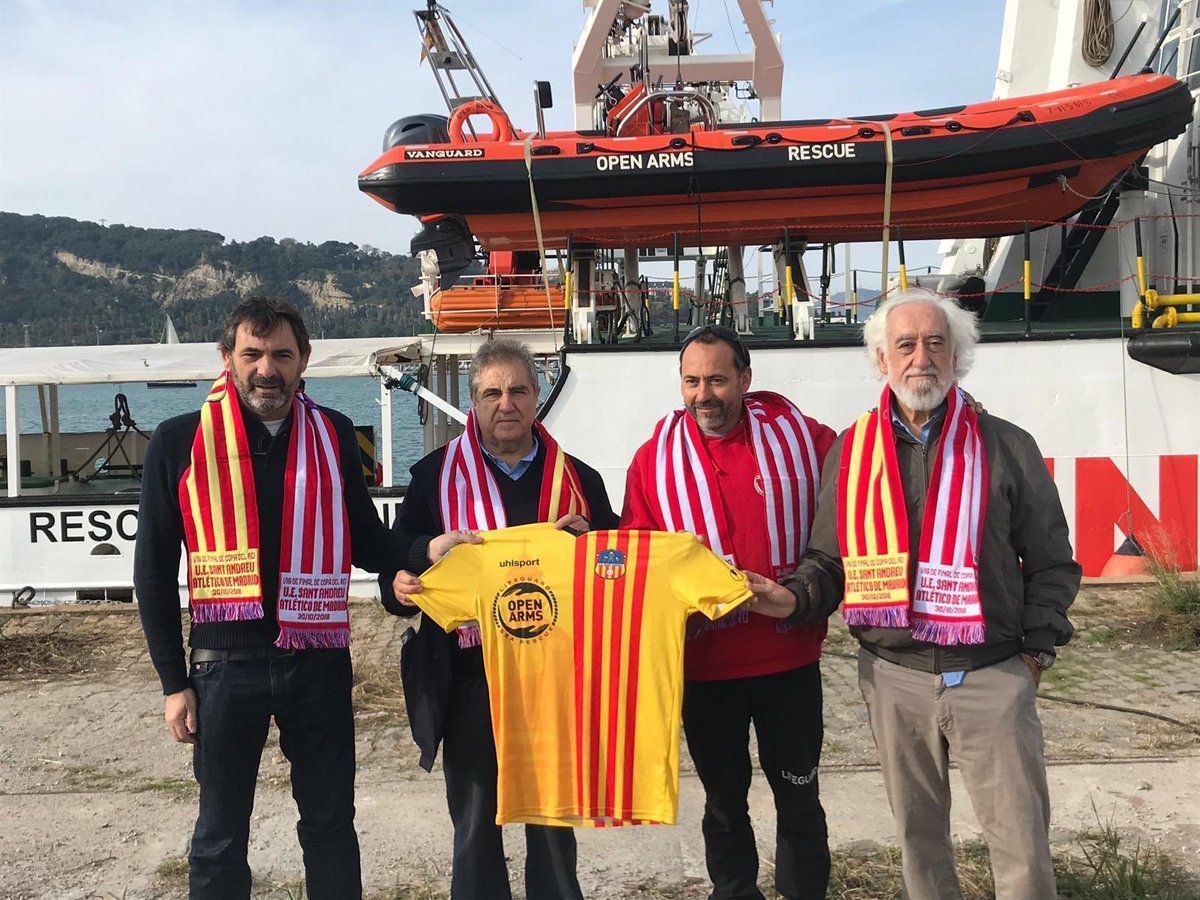
An example is when drawn against Atletico Madrid, in 2018, the club swapped a traditional high-paying sponsor for the logo of ‘Open Arms’ (an NGO dedicated to rescuing refugees in the Mediterranean Sea since 2015). UESA joined the campaign “Free Open Arms” to express its disagreement with the Spanish government’s decision to ban the organization’s ship from sailing in the Mediterranean to continue its humanitarian rescue operations. Up to the current season (2025/26), UESA teams continue to wear the logo on their jersey and raise awareness to the cause.
From supporting local refugees with integration matches to defending women’s rights, the club proves that football can be a vehicle for social justice and the protection of dignity for all.
Sant Andreu also champions a Sound Business Environment (another pillar of positive peace) by resisting the gentrification that has turned top-tier football into a luxury product. The club maintains its soul by prioritizing the local economy: their jerseys are produced by a local company, and matchdays provide a vital boost to neighbourhood businesses. They ensure that the club’s success translates into tangible prosperity for the people of Sant Andreu.
However, with the joy of promotion comes the reality of growth. The jump to the third tier brings institutional requirements, such as the need for natural grass. Currently, the municipal stadium uses artificial turf to accommodate dozens of youth teams (boys and girls) who are a primary source of income and community engagement.
As Font noted, “The involvement of the Barcelona city council will be necessary” but the people of Sant Andreu have already mobilised themselves within a week of the promotion with posters, t-shirts, threats to demonstrations, signatures. The City Council got the message and announced that it will replace the grass of UESA’s stadium as well as that of Europa – the club from La Vila de Gracia and the main rival of Sant Andreu.
This transition looks at two other pillars of positive peace: a Well-Functioning Government, responsive to the interests and needs of the people; and Equitable Distribution of Resources, as modernization cannot mean losing the soul that made the club successful in the first place.
Even though they just climbed to third tier, Sant Andreu is a “first division club on and off the pitch” not because of its budget, but because of its heart. By staying true to the “L'Orgull de Poble” (“The Pride of the Town”), Sant Andreu is proving that the most successful clubs will be those that belong to the people.
Links for reference and further reading:
- https://www.skysports.com/football/news/11095/13512982/inside-sant-andreu-barcelonas-anti-fascist-cult-club-capturing-the-imagination-and-set-for-promotion-to-spains-third-tier 
- https://www.uesantandreu.cat/2019/01/el-sant-andreu-se-suma-a-la-campanya-freeopenarms/ 
- https://en.ara.cat/sports/sant-andreu-goes-crazy-with-the-promotion-of-its-team-to-primera-rfef_1_5712183.html 
- https://www.catalannews.com/sports/item/ue-sant-andreu-creating-community-in-passion-values-and-promotion 
- https://www.youtube.com/watch?v=nLrC53pszaA 
- https://www.elnacional.cat/ca/esports/misteri-gol-quadre-dali-salvador-sant-andreu_1478460_102.html