Don’t Forget the Earth in the World Cup
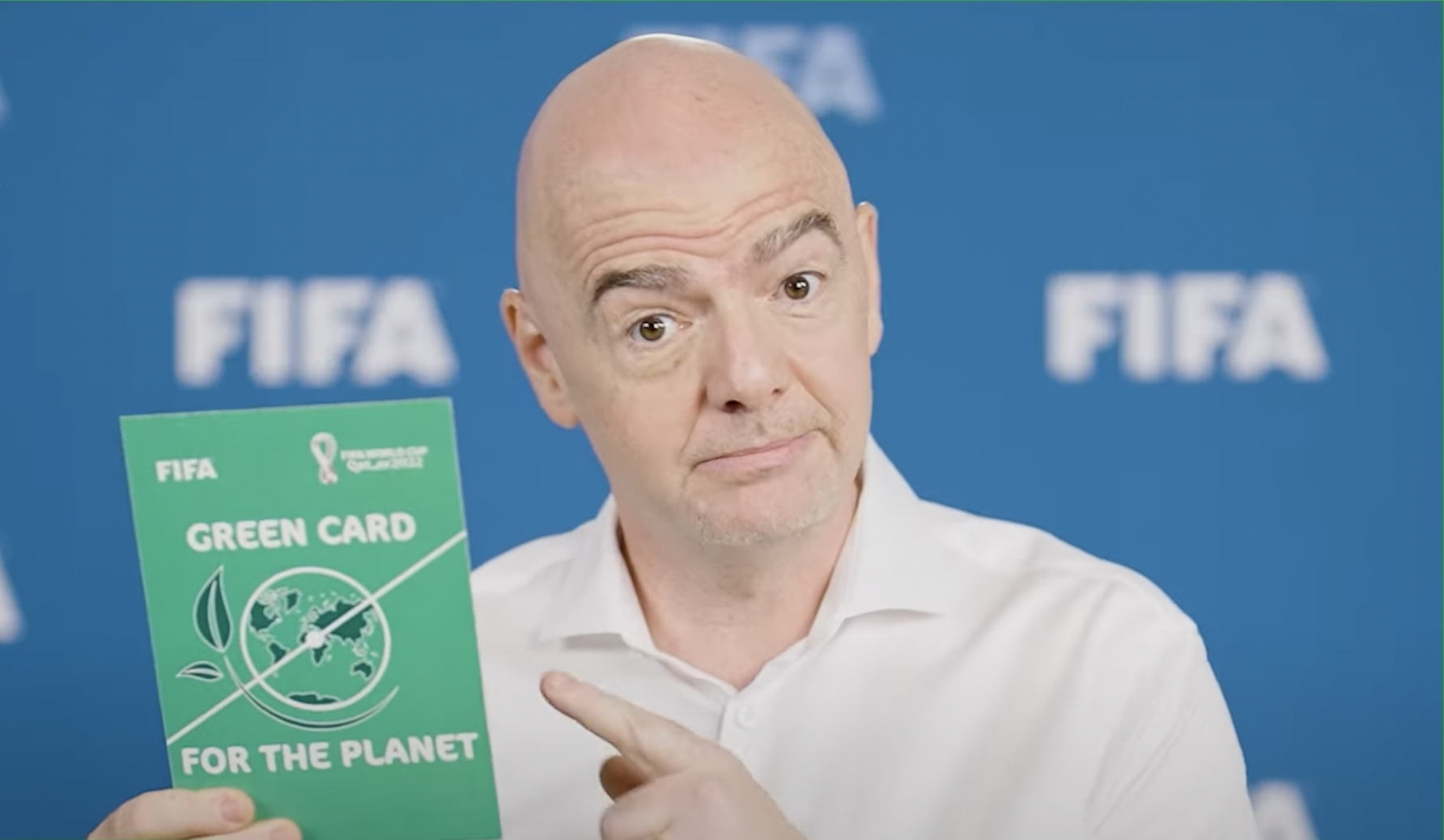
Since 2014, FIFA moved beyond environmental awareness campaigns and began implementing formal, mandatory sustainability strategies for its flagship tournaments. For the 2026 Men’s World Cup, Gianni Infantino himself promised it would be the most sustainable event yet. He also claimed this would be the most inclusive show on earth, and we have already discussed concerns in regards to upholding their own human rights standards before the tournament even started. Now that it has and we see the omnipresent FIFA President attend multiple games (on the same day sometimes), we need to address the ecological aspect.
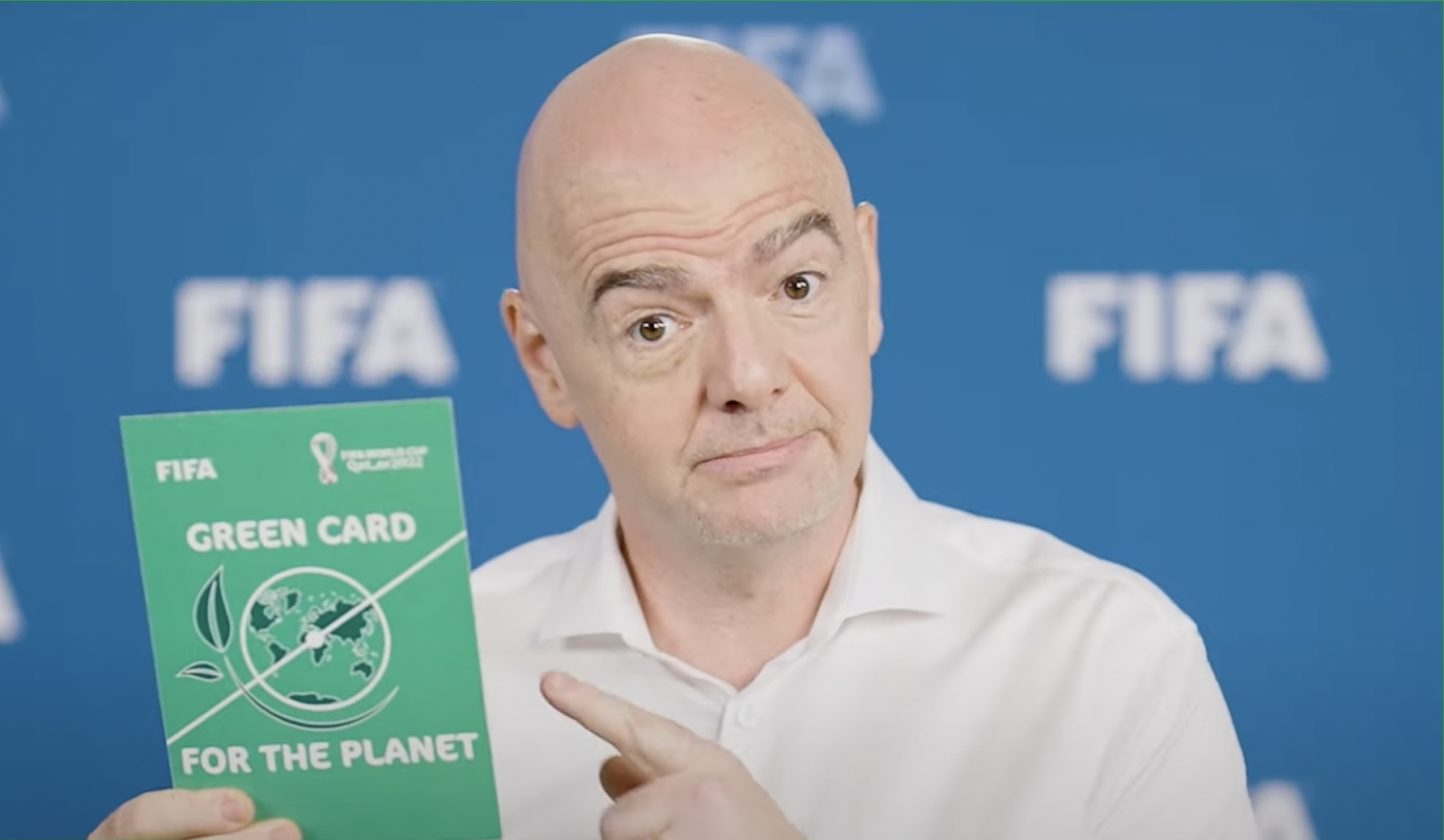
FIFA President shows ‘Green Card for the Planet’ ahead of the Qatar World Cup (June 2022)
Football and peacebuilding alike happen in different spaces: the global (international politics), the social (culture, politics and economy), the human (personal relationships) and the ecological (the relationship between the people and the planet). Let us illustrate how each manifests in international events such as the World Cup:
- Global Space: FIFA operates like a governing body of football worldwide and its events can be seen as beacons of sport diplomacy and transnational cooperation.
- Social Space: The World Cup offers a global stage for cultural exchange as it blends different countries and boosts local communities and economies.
- Human Space: It is a leveling, unifying field where players from all kinds of background come together in competition and camaraderie, respecting the rules of the game and the human rights.
- Ecological Space: Where football is played and the way major tournaments are hosted must recognize the threats of climate change, consider the environmental footprint and promote action.
The weather has been a hot topic this World Cup. It was known from the 2025 FIFA Club World Cup also held in the United States during the summer of the high temperatures and the protocol for rain (which is actually US law). Actually it was known way before: when the 1994 FIFA World Cup was also held in the USA, players “experienced episodes of heat, but such conditions were less widespread than those anticipated today, due to the strong increase in extreme heat and heat stress from human-induced climate change” (Kimutai et al, 2026).
So, due to “the tournament’s wide geographic distribution, environmental/climatological conditions were already expected to differ substantially between host locations” (Kimutai et al, 2026). Still, we hear players and staff members mention how the heat forces them to change their engagement and even their game. Climatecentral.org has even created an interactive platform to “see how heat could affect the teams playing in the 2026 World Cup.”
Earth FC has said it: “If the climate changes, the game changes”, even if that means controversial hydration breaks in the middle of the game. Some may claim they strip the essence of the game, but it might simply be a reflection of our everyday actions in the four years between each World Cup. In fact, it is important to note that the regulations for the tournament only consider postponement at WBGT (Wet Bulb Globe Temperature, an index combining humidity, radiant heat and air movement, which affect the body’s ability to regulate its internal temperature) levels exceeding 32°C, though the global players’ union (FIFPRO) recommends that matches must include cooling breaks when it reaches 26°C or higher (Kimutai et al, 2026).
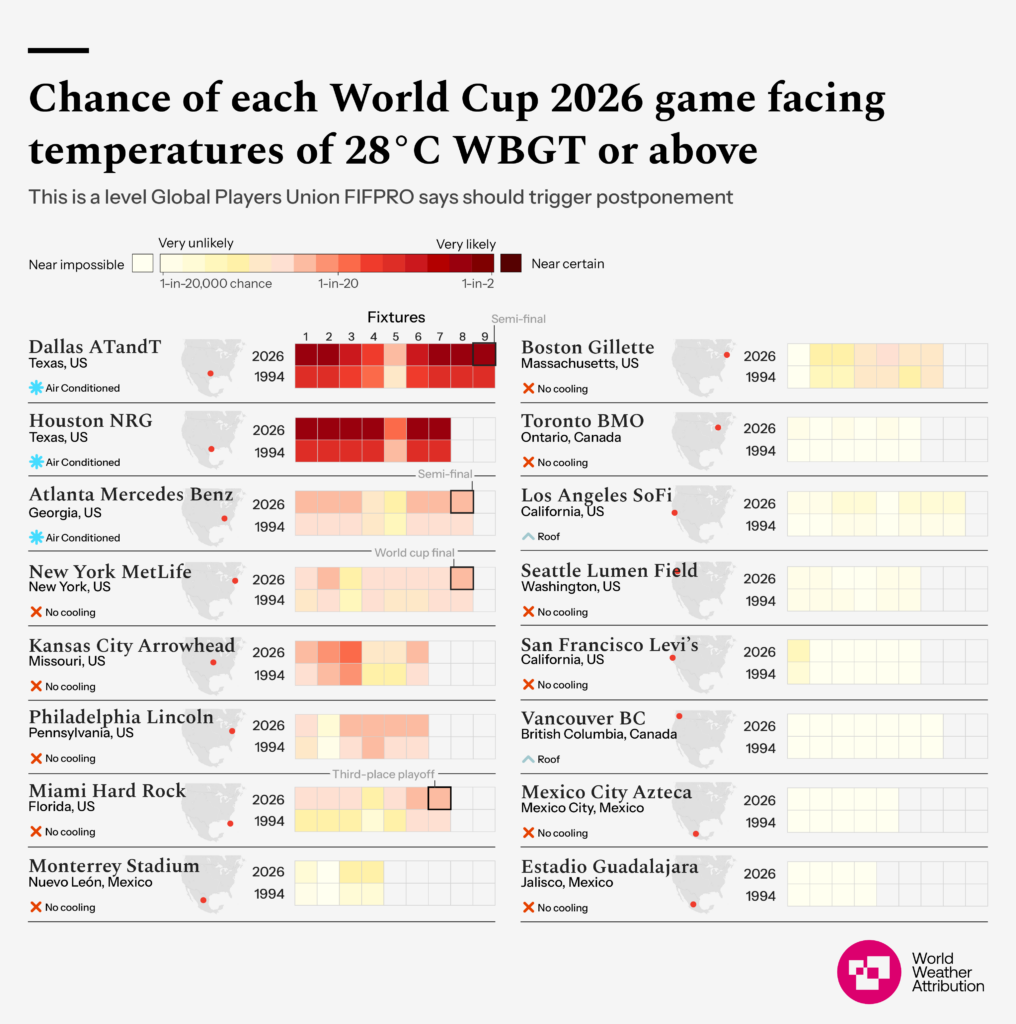
Click image to read full article at World Weather Attribution.
Back to Infantino. It has been said that he is using a private jet provided by Qatar Airways in attempt to watch two World Cup matches per day (Hughes, 2026), but his travel map during the tournament so far sparked criticism. Rightfully so – he is logging tens of thousands of kilometers leaving a massive carbon footprint. And it hasn’t been two weeks yet.
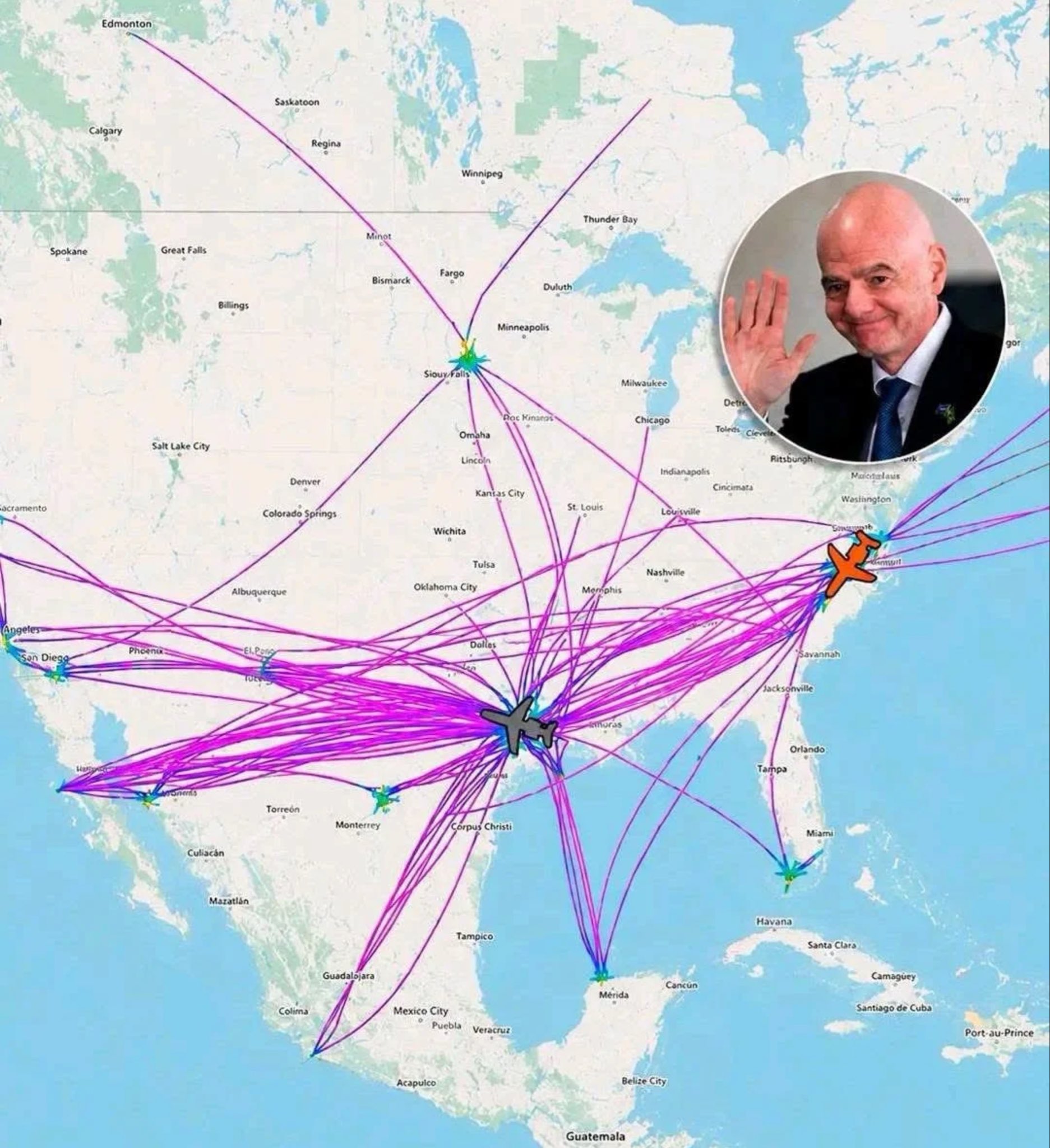
However, it isn’t just Infantino. The way the 2026 World Cup is being hosted across three countries (Canada and the United States being second and third largest in territory) forces national teams, workers and supporters to travel long distances. Though it is too late to change this setup, it is not too late to question FIFA on how they plan on making up for the incredible amounts of CO2 emissions.
Football is on the frontline of climate crisis. According to the “Pitches in Peril” report by Football For Future and Common Goal, rising heat, flooding, and drought can make the game unplayable in many places by 2050. From data to action, this resource is invaluable to individuals and organizations on how to act and safeguard football for future generations.
Some clubs are already taking the lead on this. A while ago, we wrote about and celebrated the EFL Environmental Club Award of Bradford City AFC and their Greener Bantams strategy. Also in the Premier League, Arsenal was “the first club to sign up to the UN Sports for Climate Action Framework, and is the only club with a net-zero target approved by the Science Based Targets initiative.” And UEFA recently signed a sustainability agreement with the Japanese FA, sharing guidance and best practices to strengthen social and environmental efforts in regional associations and football for community in Japan.
Ultimately, the 2026 World Cup serves as a stark reminder that the beautiful game cannot outrun a changing climate. While pioneering clubs and frameworks prove that a sustainable future for football is possible, top-down accountability remains the missing piece on the global stage. If FIFA truly wishes to uphold its “Green Card for the Planet” and keep the game alive for generations to come, it must move past rhetoric and promises. We can no longer afford to celebrate inclusivity and diplomacy on the pitch while turning a blind eye to the massive ecological footprint left in their wake. It is time for FIFA to play by its own rules, because if we lose the planet, we lose the game.
References and resources:
- Arsenal FC (2026) Sustainability. Available at: https://www.arsenal.com/sustainability
- Football For Future (2026) Pitches in Peril: a landmark climate report ahead of the 2026 World Cup. Available at: https://footballforfuture.org/pitchesinperil
- Hughes, M. (2026) ‘Infantino using private jet in attempt to watch two World Cup matches per day’, The Guardian, 16 June. Available at: https://www.theguardian.com/football/2026/jun/16/infantino-private-jet-world-cup-matches
- Kimutai, J., Keeping, T.R., Zachariah,M., Barnes, C., Clarke, B. and Otto, F.E.L. (2026) Climate Change Big Player at FIFA World Cup 2026. World Weather Attribution. Available at: https://www.worldweatherattribution.org/climate-change-big-player-at-fifa-world-cup-2026/
- UEFA (2026) UEFA signs new sustainability agreement with the Japanese FA. Available at: https://www.uefa.com/news-media/news/02a5-20ab74751177-ca48d0860619-1000--uefa-signs-new-sustainability-agreement-with-the-japanese-fa/