World Cup Week 1 Recap: News and Stories Worth Reading
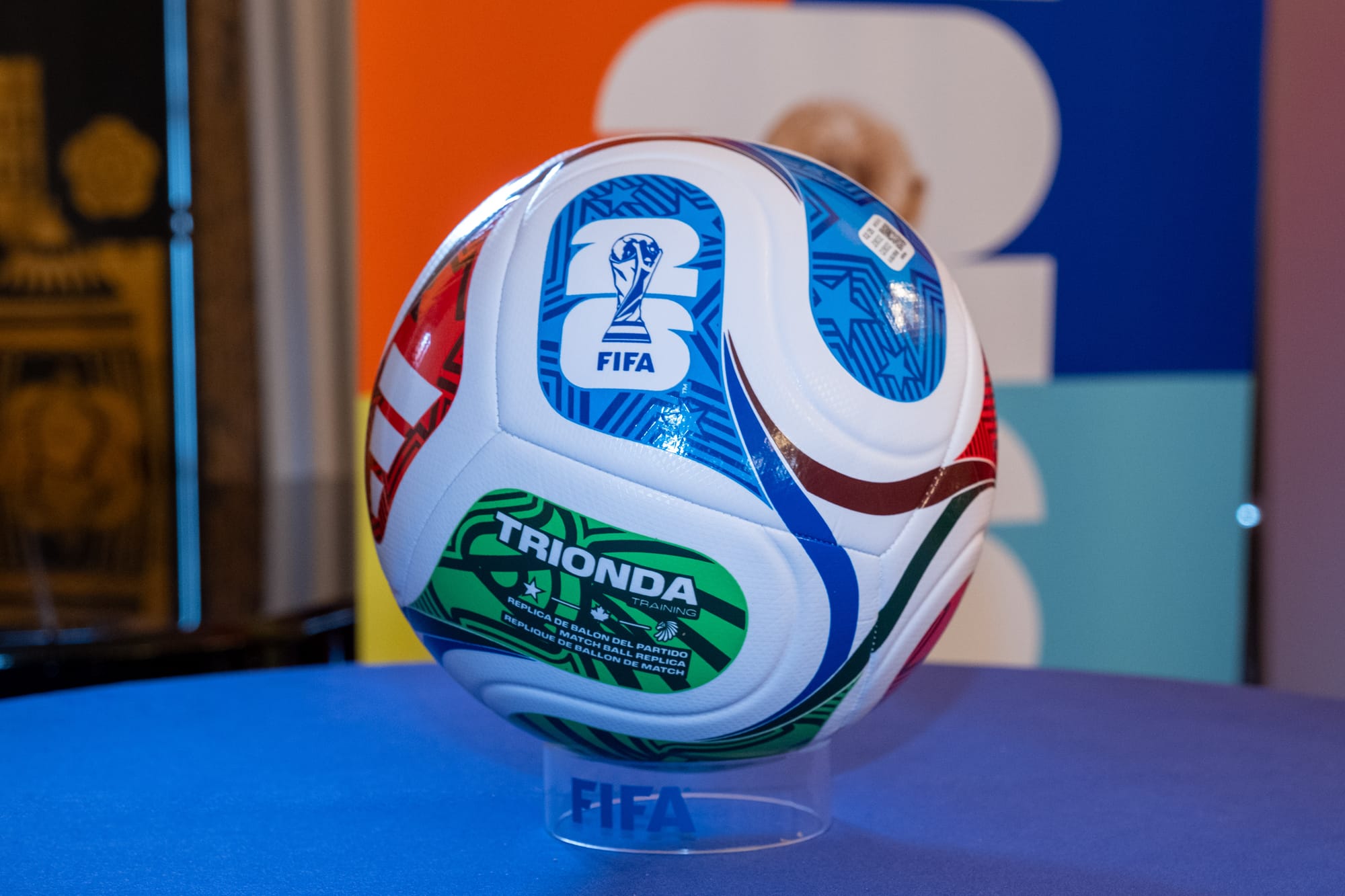
As COPA90 beautifully put it, this is the “World’s Cup”.
This year’s tournament feels especially vital, with an expanded field of 48 nations playing amidst a backdrop of rising global tensions and conflict. On the global stage, football does far more than just entertain; by bringing together different countries, peoples, and cultures, it shines light on historical legacies and critical current affairs.
The first week of the tournament has already given us incredible narratives both on and off the pitch. If you haven't been following the headlines closely, here are the essential news pieces and stories so far that are absolutely worth a read.
June 14 | Curaçao’s dream come true despite a tough loss
The images from the Curaçao squad celebration after Commencia scored their first goal on a World Cup sums up what it is about. Dick Advocaat, the national team’s manager even got emotional and couldn’t hold his tears. In the end, they suffered a tough loss to Germany (7-1), but the people of Curaçao still expressed their pride. For a country of a little more 150,000 people, this is about putting them on the world map.
See: Curaçao National Football Team on X
Curaçao and German players pray together at full-time
After the final whistle, a few players from both Germany and Curaçao national teams formed a prayer circle. A very unusual scene, specially after a tough loss for Curaçao. When asked about that moment, the German midfielder Nmecha said “In the game we are opponents, but after the match we are all Christians and brothers. We simply said a little prayer together because we are all very grateful.” This is the power of football to unite the world.
June 13 | From a refugee camp to becoming the youngest socceroo to score at a World Cup
Nestory Irankunda was born in a refugee camp in Tanzania, after their parents fled Burundi because of a civil war. The 20-year-old forward became the youngest scorer in the World Cup for the Australian National Team. His success goes to show what happens when we support migrant communities and how football can be a tool for integration and possibilities.
June 14 | Japanese fans continue their World Cup tradition
In all international sport events we can spot Japanese fans picking up litter after games. And it was no different after the 2-2 draw against the Netherlands. For the people in Japan, that’s absolutely normal – may we learn from them.
June 15 | I mean, Cabo Verde…
Cabo Verde tied with Spain (0-0), one of the favorites to win the title this year. They also conceded only one foul in the entire match, despite Spain having 74% of ball possession – this is the fewest by any team in a World Cup match since 1966. Their goalkeeper was the star of the night, and superior player of the match. At 40 years old, Vozinha or Josimar, became the oldest goalkeeper to have a clean sheet in World Cup history.
Watch this heartwarming video of their population celebrating what felt like a win against Spain.
June 16 | Aymen Hussein is living his dream
But it didn’t start so dreamy. When he touched down on US soil, Hussein, the captain of the Iraqi squad, was detained by Customs and interrogated for 7 hours. Years of invasion and war have shaped his upbringing – he lost his father and his brother was kidnapped. Football offered respite and he kept on dreaming. And on their World Cup 2026 debut, Hussein scored.
If you want to know what this means for his people back home, watch this incredible piece by Copa90: Iraq's 40-Year Wait Ends: Inside Baghdad's Greatest Night.
June 15 | "This is not a fair competition"
Staying in Tijuana, the players expressed how tired they feel from having to travel to the US only 2 days before their game. Their captain, Mehdi Taremi, referred to FIFA’s motto “We just want peace,” but the amount of problems they have endured are affecting their team.
“Everything is a disaster for us… But we don't follow excuses. We are looking forward and we have hope for the next two games. We will do our best for our people and bring joy to our supporters,” Mehdi said after the match against New Zealand.
It is clearly an unfair situation, a failure to guarantee equal conditions to all teams and to allow players to focus on their game – see this snippet from a press conference with Mehdi addressing the fact that no one asked football-related questions.
And if you want to get an inside look of their daily life in this World Cup, I recommend this video of this Brazilian youtuber who spent a day with the Iranian delegation.
June 15 | The first Brazilian woman to narrate a Men's World Cup match from the stadium
Renata Silveira made history once again. In 2014, she was the first woman to narrate a World Cup game for Rádio Globo; in 2018, she was the first woman to narrate a World Cup final for Fox Sports; in 2022, she was the first woman to narrate a World Cup game on broadcast TV (Globo). This year, she became the first Brazilian women to narrate a World Cup game directly from the stadium.
What was even more meaningful was her encounter with Vicky Sparks, the first woman in the UK to narrate a World Cup match (Russia, 2018) – see the photos and read this powerful reflection by one of Silveira’s colleagues on LinkedIn.
Commercial football?
If you watched any of the games so far, you noticed the hydration breaks in the middle of each half. However, it has become clear that these are not solely for the wellbeing of players, but to allow commercials to play. Even players noticed and spoke about it – see Van Dijk’s comment.
Another concerning aspect was mentioned by Zlatan Ibrahimovic: mandatory halftime interviews. Brazilian Vini Jr refused to stop for an interview and raised controversy, but Ibrahimovic went out in his defense:
“For 45 minutes, players are warriors in a storm. They run, they fight, they suffer, they bleed. Then they get 15 precious minutes to recover, to breathe, to listen, to think. And FIFA wants to spend part of that time chasing soundbites? (...) This is modern football’s biggest disease. Everything is content. Everything is sponsorship. Everything is television. The match hasn’t even finished and they’re already trying to manufacture headlines.”
"Football does not belong to a small group of privileged leaders."
13 nations competing in this World Cup (Senegal, Cabo Verde, Curaçao, Uzbekistan, DRC, Haiti, Algeria, Morocco, Egypt, Ivory Coast, Ghana, South Africa) released a joint statement expressing their “profound disappointment” with UEFA president Aleksander Čeferin for calling “a huge number of matches” at the tournament “uninteresting.”
It “is deeply disappointing and amounts to ignoring the efforts, sacrifices, and aspirations of players, coaches, clubs, football officials, and fans around the world.”
“Behind every national team are entire communities and millions of people who see football as a source of pride, hope, and unity.”
“Four our countries, qualifying for the FIFA World Cup represents a historic achievement and a dream come true shared by generations. (...) It is a moment that inspires a generation, accelerates the development of football, and creates memories that last a lifetime.”
Indeed, in this first week they have all showed that “every game counts.” Read the full statement here.
June 17 | Bringing joy amidst suffering
The Democratic Republic of Congo tied against Portugal (1-1) on their debut, bringing joy to a country marked by war and suffering. Yoane Wissa, who scored the goal, said:
“You know, the situation back home is very difficult. Congo is going through a war. This means the world to them. People only see what they want to see, but our people are very hardworking and very strong. So I am genuinely happy for them. I only pray for peace to come, and I hope everything goes well for them.”
The people of Musasa Refugee Camp were overjoyed when the Léopards scored, singing, dancing and chanting – watch the video here.
And in the crowds, one particular fan is expected to draw attention. “Mboladinga went viral during this year’s Africa Cup of Nations by standing motionless for entire matches, posing as a tribute to Patrice Lumumba, the country’s first prime minister and independence icon. He believes the ritual gives the team emotional stamina, and the players clearly value it too.” Members of the squad itself pleaded their president to get him included in the delegation. However, he was not present in the initial match against Portugal “because his travel clearance was still complicated by U.S. entry restrictions tied to an Ebola outbreak.”
June 16 | Playing without their people
Senegalese nationals were not able to watch their country play in the United States, due to travel bans. The captain of the squad, Kalidou Koulibaly, spoke out and expressed his frustration, questioning such restrictions that don’t apply in the same way to other nations. “I think every team can have their people, so I don’t understand why people from Africa cannot have their people.”