The Largest, Most Fearsome World Cup So Far
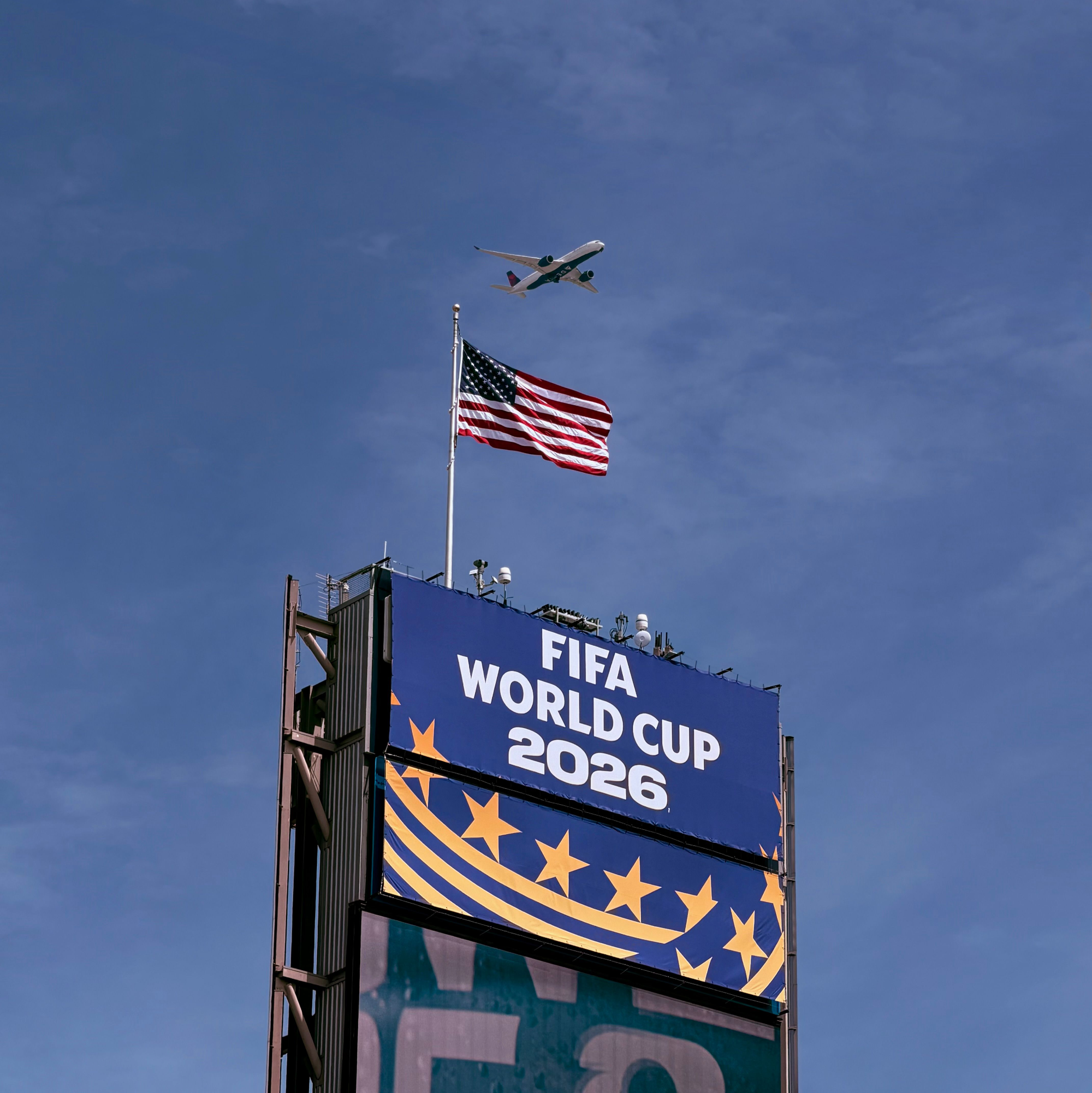
Last week, the Sport & Rights Alliance held a press briefing to discuss human rights concerns surrounding the 2026 Men's World Cup™ in the United States, Canada, and Mexico. Among the speakers were former players, community organizers, press freedom advocates, and fan representatives (see a complete list below).
Just a few days ahead of the kick-off, players, officials, fans and journalists have been concerned if they would even make it to the United States, where most games will take place. From an Iraqi player questioned for seven hours upon his arrival to Scottish fans having their travel permits withdrawn last minute and the Top CAF Referee from Somali denied entry to the US. These are just some of the most recent news.
Concerns span from the dangers in and beyond the stadiums, the current political landscape in the United States and the borders between the three host countries. As it has been also recently reported, the Iran squad will have to “enter and leave US soil on the same day of their matches played in the United States”. Besides no sport isonomy, the question that remains is what are the guarantees that Human Rights standards will be upheld throughout the tournament?
If FIFA intends to do a better job in this aspect, after the discrimination against LGBT people in Russia in 2018 and the deaths of migrant workers in Qatar in 2022, it is actually going the opposite way. What Infantino promised to be the most inclusive show on the planet is at risk of “being defined by exclusion and fear.”
This is the largest World Cup™ to date, with 48 nations competing and some of them for the first time in their country’s history. But travel bans impede nationals to support their teams in-person; those who can travel are fearful of racial profiling, including players and their families; and local communities of migrants don’t know if they may encounter ICE (or local agencies and officers acting as such) in stadiums or fan zones.
It is safe to say that FIFA has lost control of their anti-discrimination and human rights commitments for this World Cup™, with most of the 16 host committees still without their required Human Rights Action Plans. As stated by the SRA, “It is impossible to manage human rights risks without identifying them and putting in place systems to manage them.”
In fact, we cannot disregard that FIFA endorses this terrible demonstration (and precedent, given that Saudi Arabia has been announced as 2034 host country) of upholding their own Human Rights standards. The “FIFA Peace Prize – Football Unites the World” awarded to US President Donald Trump on November 5, 2025 during the final draw for the tournament is proof of that.
Just like the 2018 and 2022 editions, this is a highly politicised World Cup. And if we are serious about upholding human rights and avoiding double standards, we must do a lot better. Larger entities, such as sponsors and federations, should be pressuring more. Local communities and agencies are doing far more – as a matter fact, they are doing the work FIFA was supposed to do. This is a worldwide event, the widest so far, but let’s not forget the world in it.
References & Resources:
- Thumbnail photo credit: AP News. Retrieved from: https://apnews.com/article/trump-world-cup-fifa-peace-prize-e14f95b8adaa197c869cad407b6ef604
- Amnesty International USA. (2026, March 29). Humanity must win: Defending rights, tackling repression at the 2026 FIFA World Cup. Amnesty International USA. https://www.amnestyusa.org/reports/humanity-must-win-defending-rights-tackling-repression-at-the-2026-fifa-world-cup/
- Arab News on Instagram [@arabnews]. Instagram Reel on 2026, June 7. Retrieved from https://www.instagram.com/reels/DZR9G8rTuta/
- BBC Scotland News. (2026, June 5). Scotland fans 'heartbroken' as travel permits to World Cup withdrawn last minute. BBC News. https://www.bbc.com/news/articles/cwy2yleex87o
- Gianni Infantino - FIFA President on Instagram [@gianni_infantino]. Instagram Post on 2025, December 29. Retrieved from https://www.instagram.com/p/DS2dKSaiKUI/ 
- Human Rights Watch. (2026, April). 2026 World Cup reporters' guide. Human Rights Watch. https://www.hrw.org/sites/default/files/media_2026/04/2026%20World%20Cup%20Reporters%27%20Guide%20web_0.pdf 
- Human Rights Watch. (2025, December 3). US: ICE arrest at FIFA event spotlights dangers for World Cup. Human Rights Watch. https://www.hrw.org/news/2025/12/03/us-ice-arrest-at-fifa-event-spotlights-dangers-for-world-cup
- Human Rights Watch. (2026, April 10). World Cup: 2 months out, FIFA and host cities sideline rights. Human Rights Watch. https://www.hrw.org/news/2026/04/10/world-cup-2-months-out-fifa-and-host-cities-sideline-rights
- Human Rights Watch. (2026, April 27). 2026 World Cup: Tournament will kick off in climate of fear. Human Rights Watch. https://www.hrw.org/news/2026/04/27/2026-world-cup-tournament-will-kick-off-in-climate-of-fear
- Middle East Monitor. (2026, June 6). Iraqi football player questioned for 7 hours after arriving in US: Reports. Middle East Monitor. https://www.middleeastmonitor.com/20260606-iraqi-football-player-questioned-for-7-hours-after-arriving-in-us-reports/
- Sport & Rights Alliance. (2026, June 3). World Cup 2026. Sport and Rights Alliance. Retrieved from https://sportandrightsalliance.org/worldcup2026/
- The Whistler. (2026, June 8). Top CAF referee denied entry into US for W/Cup. The Whistler Newspaper. https://thewhistler.ng/top-caf-referee-denied-entry-into-us-for-w-cup/
- Wang, C. (2026, June 1). 'We want fans to know the risks': US immigrant rights groups mobilize across World Cup host cities amid ICE fears. The Guardian. https://www.theguardian.com/us-news/2026/jun/01/ice-fifa-world-cup-immigrant-rights
List of panelists at the SRA Press Conference “Climate of Fear in the Final Countdown to the 2026 World Cup: Perspectives from People Impacted by FIFA’s Top Tournament” held on June 3rd:
- Matt Pacifici, former US professional player, Athlete Ally ambassador
- Craig Foster, former Australian National Team (Socceroos) captain and broadcaster
- Maxime Gleizes, brother of Christophe Gleizes, wrongly imprisoned French football journalist
- Thibaut Bruttin, Director‑General, Reporters Without Borders (RSF)
- Bailey Brown, President, Independent Supporters Council
- Ronan Evain, Executive Director, Football Supporters Europe
- Yareliz Mendez‑Zamora, Florida Policy Coordinator, American Friends Service Committee
- Minky Worden, Director of Global Initiatives, Human Rights Watch
- Andrea Florence, Executive Director, Sport & Rights Alliance (moderator)