World Cup Week 2 Recap: More Worth Reading
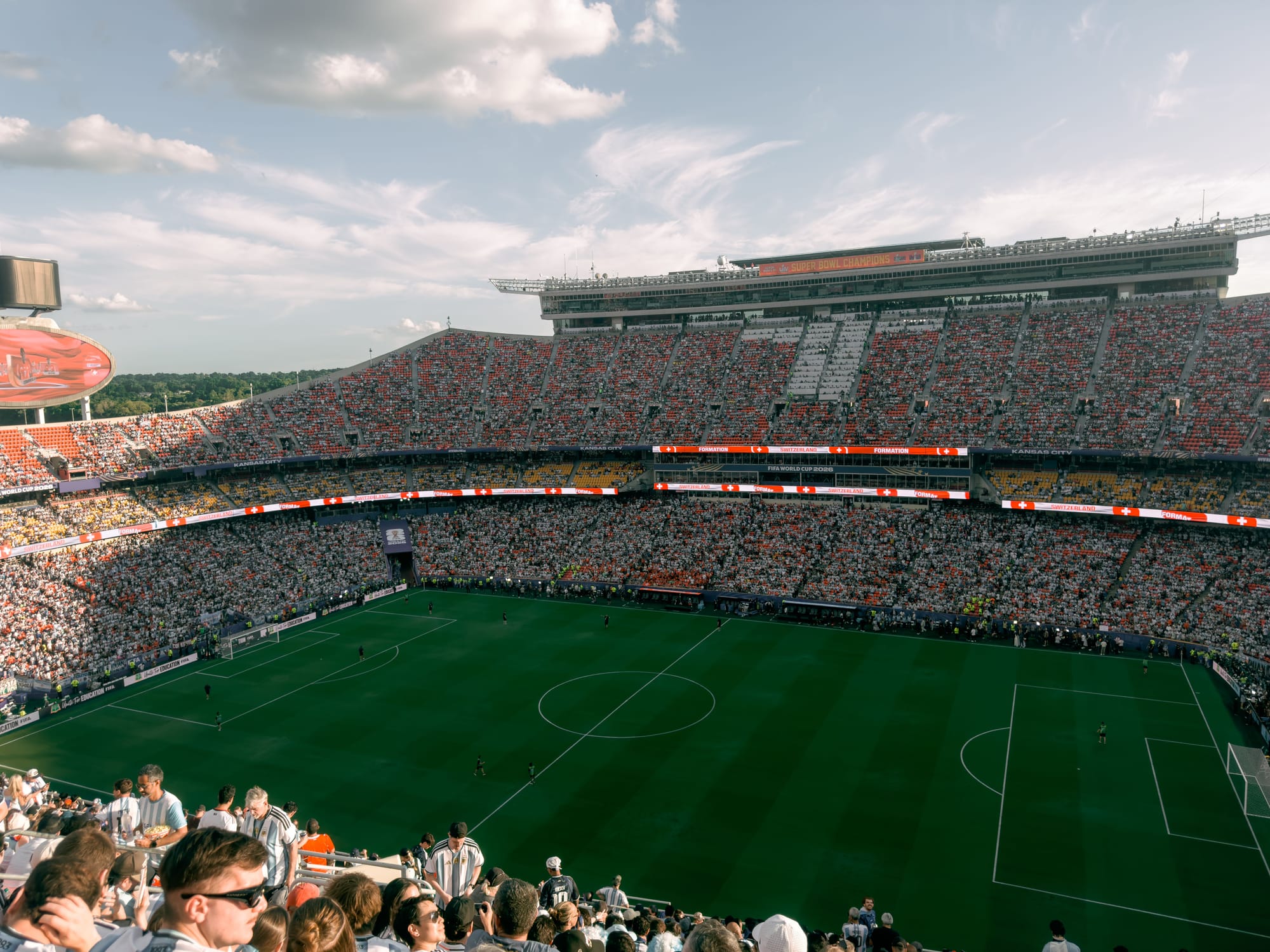
Messi surpasses Marta
This week, history was made in football. Messi scored twice against Austria and became the all-time leading goalscorer in FIFA World Cup history, surpassing Brazilian football legend Marta. His celebration on the pitch included the Argentinian journalist, Joaquín Bruno, making this an even more unforgettable World Cup moment. Read more here.
From the Iranian squad, in peace
Iran National Team left a thank-you note in the locker room after draw with Belgium, in Los Angeles. A message thanking for the hospitality and hoping for peace. “Thank you, Los Angeles, for your hospitality. (...) May peace, respect, and friendship prevail among all nations.” Read more here.
They also showed their appreciation for the Mexicans who support them and make them feel at home. “Irán, hermano, ya eres Mexicano,” (Iran, brother, you are already Mexican) is what fans chant, “making it a lot easier” for a team that faces a lot of extra challenges off the pitch. Watch “Alireza Jahanbakhsh thanks Mexico supporters for the love”.
Egypt claimed their first-ever World Cup win…
…and Salah led celebrations on the streets of Vancouver (watch it here). The squad threw a party in front of the stadium, close to the fans and very similar to how the people in Cairo also erupted in joy and took the celebrations to the streets. An expression of national pride that transcends borders and reminds us of the unifying power of football.
Norway’s epic viking row
Still about national pride - From the bleachers, to Times Square, to children in schools, to the pitch… The Norwegian National Team and fans have gone viral for the Viking Row. A unique chant that is actually rooted in ancient traditions and the country’s nation.
Different trophies for the Men of the Match
Out of respect for religious beliefs and cultural sensitivities of some participating nations, FIFA has introduced a modified version of its ‘Man of the Match’ award, removing alcohol branding. The same approach is applied for players under drinking age. Moreover, the flags of Saudi Arabia and Iraq were not laid on the ground during the pre-match ceremonies since they include religious wording. These adjustments have become major talking points in the tournament so far, and show a high level of global awareness and cultural sensitivity.
Football and multiculturalism
Recently, Australian Senator, Pauline Hanson, made a comparison between the concept of ‘monoculture’ and the Socceroos. She has said that migration made the country lose its identity, and that though Australia is a multiracial society, it cannot be a multicultural one. When trying to explain herself, Hanson said the National Team represents her vision of a monocultural Australia. Former Socceroo and captain of the squad, Craig Foster, talked about this on his social media: “Football was known as ‘wogball’ because we were and are a home for all, and because we respect background, not erase it” (in reference to the SBS documentary). “Our players speak multiple languages, represent all religions, all regions of the world and take immense pride in their ancestry. (...) This is multiculturalism. Respect for ancestry, shared commitment to Australia.” What is powerful about his statement is that he demonstrates how the welcoming nature of the game has contributed to the contemporary Australian society: “We are the world game, for good reason.”
The essence of the game
What Craig Foster said is reflected in the connections that football sparks off the field as well. When the world knocked on the US’s doors, it began to change the prejudice and narrow-mindedness that worried many of us ahead of the 2026 World Cup. According to a non-football-fan on Facebook, what is happening in the country is a cultural moment they desperately needed. More than a tournament, there are “(a) few million tiny human moments stacking on top of each other until they become something bigger than the result of any match” happening here.
Tartan Army takes Rhode Island
Scotland’s supporters are known for their passion, humor and generosity. Although it might have been ideal to stay near the stadium in Massachusetts, hotel prices forced them to find accommodation in neighboring states. Practicality turned into meaningful connection, and the warm welcome the Scottish fans received was given back through fundraising efforts – nearly $30,000 raised for local causes by the Tartan Army community they created there. A legacy far beyond the stadium. Read more about it here.